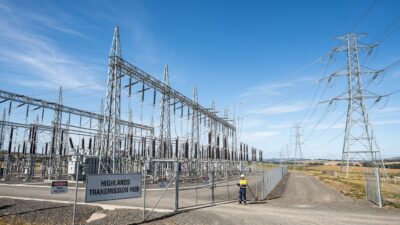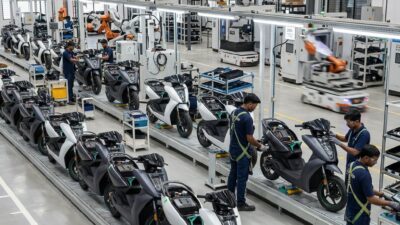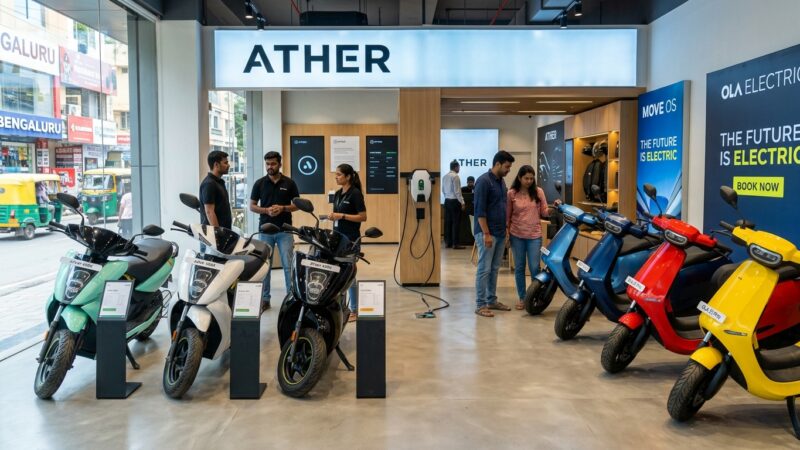
The competitive hierarchy of India’s electric two-wheeler market has undergone a dramatic structural reversal, with legacy automotive manufacturers capturing dominant market share from early-mover EV startups. Registration data from the Ministry of Road Transport and Highways (Vahan) reveals that Bhavish Aggarwal-led Ola Electric experienced a sharp market share contraction in July 2026, dropping to 6.8%—a steep fall from its peak market dominance exceeding 30% in prior years. Ola Electric now ranks fifth in monthly domestic EV scooter registrations.
In contrast to Ola Electric’s market share slide, legacy auto giants TVS Motor Company and Bajaj Auto have solidified their market leadership positions. TVS Motor secured the top spot in July 2026 with a 27.3% market share, driven by strong consumer demand for its iQube and newly launched Orbiter electric scooter variants. Bajaj Auto maintained a firm second position with a 22.5% market share as its Chetak electric lineup scaled across urban and semi-urban dealership networks. Meanwhile, Ather Energy held 14.9% market share, and Hero MotoCorp’s Vida brand crossed 10%.
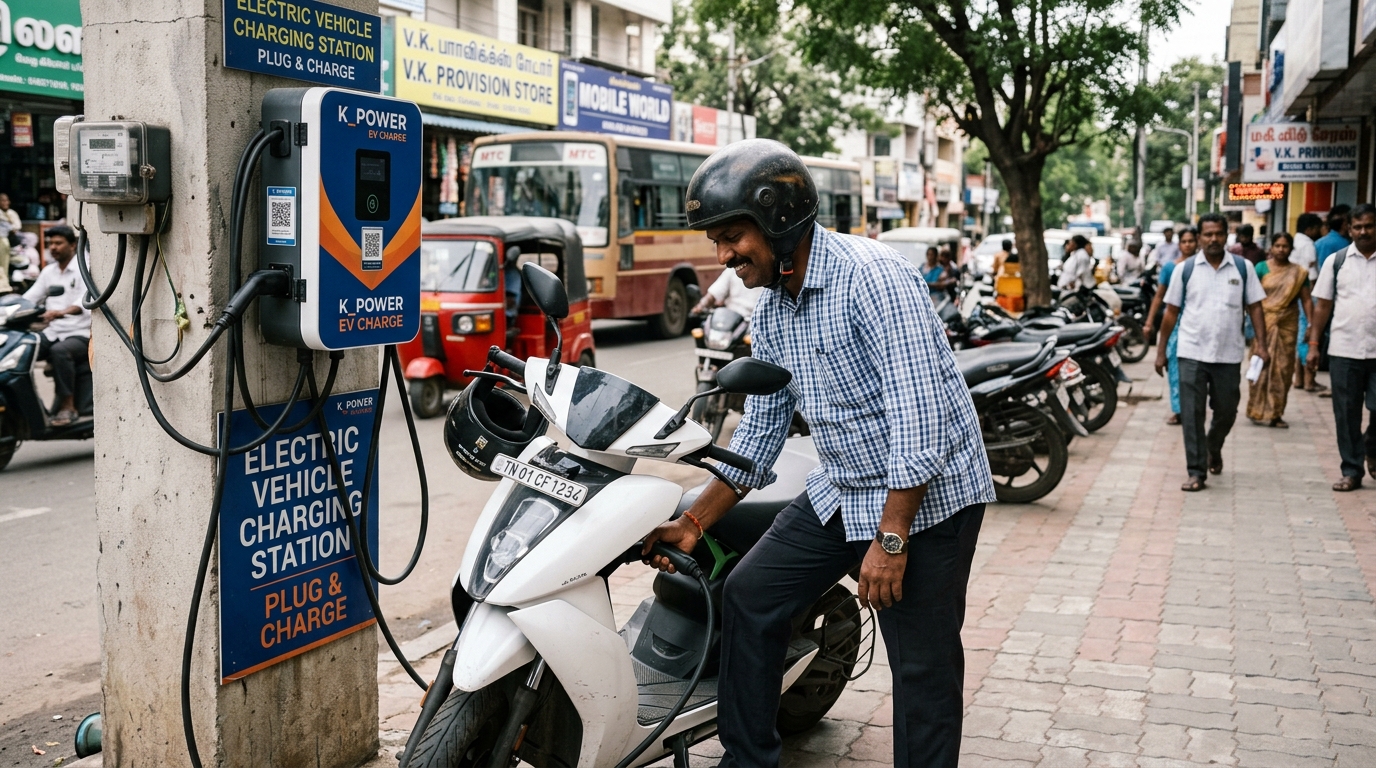
Automotive analysts attribute the shift in market leadership to consumer preference for proven after-sales service networks, build quality, and dealer accessibility. While pure-play EV startups initially gained rapid market traction through direct-to-consumer (D2C) online sales models, persistent service backlog complaints, spare part delays, and software glitches created customer dissatisfaction. Established automakers leveraged their vast nationwide physical service infrastructure to provide reliable post-purchase support.
Financial Stability & Legacy Dealership Advantages
The financial architecture of legacy manufacturers has also played a decisive role in market consolidation. Established players like TVS, Bajaj, and Hero MotoCorp utilize steady cash flows generated by their core internal combustion engine (ICE) businesses to fund long-term EV research and development, supply chain localization, and battery assembly facilities. Unencumbered by high startup cash burn rates, legacy OEMs have successfully scaled production capacity while absorbing raw material cost fluctuations.
Despite Ola Electric’s recent launch of its gigafactory cell manufacturing initiatives and cost-restructuring efforts, the company faces growing pressure to rebuild dealer relationships and service satisfaction scores. With total Indian electric two-wheeler registrations surpassing a historic 200,000 monthly units in July 2026, the market has entered a mature phase where distribution scale, brand trust, and reliable engineering determine long-term market survival.
Related Market & Tech Analysis
- Flipkart Prepares ONDC Food Delivery Launch in Bengaluru with Disruptive 10% Commission Model
- SpaceX Starship Flight 13 Success Paired with xAI’s Trillion-Parameter Grok Expansion
- Bengaluru Restaurants Issue August 15 Boycott Ultimatum to Swiggy Over 60% Revenue Cut
- Zepto Pauses IPO Plans Over Valuation Mismatch as Domestic Mutual Funds Push Back
Disclaimer: Financial news and automotive market analysis presented on Benzinga India are provided for informational and educational purposes only. Corporate equities and market investments carry financial risks. Readers should consult certified financial advisors before executing investment decisions.