India’s electric vehicle (EV) industry is exhibiting a sharp operational divide, as established automotive manufacturers and specialized EV brands report steady sales growth while market participant Ola Electric faces intense regulatory scrutiny. Commercial data from the EV sector shows strong consumer adoption for four-wheeler market leader Tata Motors and electric two-wheeler manufacturer Ather Energy. However, public confidence in Ola Electric has been tested by formal investigations from consumer rights authorities.
The Central Consumer Protection Authority (CCPA) has intensified its regulatory probe into Ola Electric following thousands of formal consumer complaints lodged on the National Consumer Helpline. Regulatory show-cause notices and a detailed investigation by the Bureau of Indian Standards (BIS) focus on alleged deficiencies in after-sales service, unfulfilled warranty claims, delayed vehicle registrations, and misleading corporate claims regarding complaint resolution percentages.
In contrast to Ola Electric’s regulatory headwinds, legacy auto major Tata Motors has reinforced its dominance in the electric passenger vehicle segment, achieving consistent volume expansion with its Nexon.ev, Punch.ev, and Tiago.ev models. Tata Motors’ extensive nationwide dealership network and established service infrastructure have provided EV buyers with reliable post-purchase support, helping the company maintain over 65% market share in four-wheeler EVs.
Ather Energy Market Growth & EV Sector Outlook
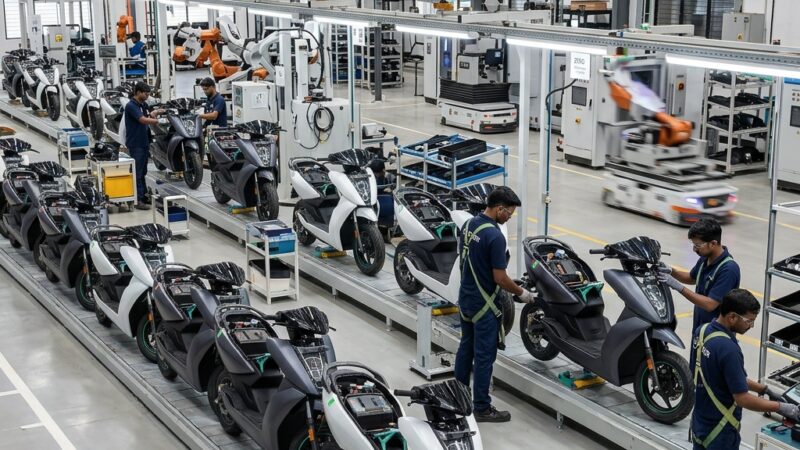
In the two-wheeler segment, Ather Energy has steadily expanded its retail footprint and charging grid infrastructure across tier-1 and tier-2 markets. By focusing on vehicle build quality, robust thermal battery management, and transparent dealer operations, Ather has captured a 14.9% market share, positioning itself as a reliable alternative for urban commuters. Similarly, legacy automakers TVS Motor and Bajaj Auto continue to gain EV market share with their iQube and Chetak models.
Automotive industry experts conclude that the Indian EV market is transitioning from an early speculative phase into a mature, quality-driven industry. Regulatory enforcement by bodies like the CCPA reinforces the necessity of reliable service networks and transparent customer support. Electric vehicle manufacturers that invest in physical service infrastructure and regulatory compliance will lead India’s ongoing transition toward sustainable mobility.
Related Market & Startup Analysis
- Astro-Tech Regulatory Concerns: AI-Generated Horoscope Apps Face Consumer Backlash Over Generic Claims
- Roblox Wipes $6.7B in Market Cap as Mandatory Facial Scanning Age Verification Triggers User Backlash
- Trump Media Monetizes Truth Social with $100,000/Month Institutional API, Triggering SEC Scrutiny
- Adani Enterprises Settles US Iran Sanctions Dispute for $275M as Adani Ports Eyes UK Infrastructure
Disclaimer: Financial news and electric vehicle industry analysis presented on Benzinga India are provided for informational and educational purposes only. Market investments carry financial risks. Readers should consult certified financial advisors before executing investment decisions.