Escalating Middle East Tensions: Is a Major War Imminent?
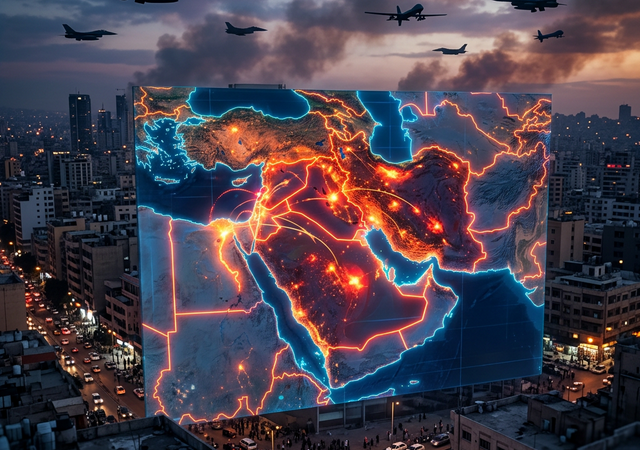
Recent escalations have brought the Middle East to the precipice of a major conflict. Reports of targeted strikes by Israel and the United States on Iranian assets, followed by Iran’s retaliatory strikes on Gulf nations—including the UAE, Qatar, Kuwait, Bahrain, and Saudi Arabia—have heightened fears of a regional multi-front war. These events closely follow claims of Israel eliminating key Iranian military leaders and the reported death of Ayatollah Khamenei. This rapidly intensifying geopolitical crisis is not a random outburst but stems from a complex history, bringing the world closer to a large-scale war than ever before.
The Core Trigger: Iran’s Nuclear Program and Uranium Enrichment
A primary catalyst for the current hostility is Iran’s controversial nuclear program. In May 2025, the International Atomic Energy Agency (IAEA) reported that Iran had amassed an estimated stockpile of 60% enriched uranium. This alarming level nears the 90% threshold required for weapons-grade material. While natural uranium contains only 0.7% of the U235 isotope needed for nuclear bombs, achieving 60% enrichment signifies a massive acceleration in capability. This development has triggered global alarms—particularly in Israel and the United States—given that Iran’s supreme leader has openly called for Israel’s eradication. The West views this not merely as an energy initiative, but as a potential offensive nuclear threat. Historical context indicates severe preventative measures; both the US and Israel have previously acted decisively to dismantle burgeoning nuclear capabilities in countries like Iraq and Syria.
The Global Economic Threat: The Strait of Hormuz
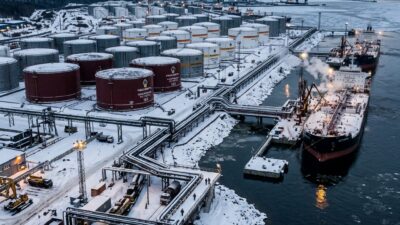
America’s deep involvement in this conflict is intrinsically tied to the strategic importance of the Strait of Hormuz. This critical, narrow sea route connecting the Persian Gulf to the Gulf of Oman serves as a vital global energy lifeline. Approximately 20% of the world’s daily crude oil exports—including critical supplies from Saudi Arabia, the UAE, Iraq, and Kuwait—pass through this chokepoint.
If a nuclear-armed Iran were to gain control of or forcefully block this strait, the immediate disruption to global oil supplies would be catastrophic. Energy prices would skyrocket, potentially plunging the global economy into a severe recession. The US fears that possessing a nuclear weapon would allow Iran to indiscriminately blackmail the international community by holding the “heartbeat of the world’s energy system” hostage.
The Domino Effect: A Middle Eastern Nuclear Arms Race
Beyond the immediate military threats, there exists a profound concern about unchecked nuclear proliferation across the Middle East. If Iran successfully develops a viable nuclear bomb, intelligence agencies fear that other regional powers—such as Saudi Arabia and the United Arab Emirates—would immediately pursue their own nuclear weapons programs out of sheer deterrence and self-defense. The Crown Prince of Saudi Arabia has explicitly stated that if Iran acquires a nuclear device, the Kingdom will swiftly follow suit.
The situation is uniquely volatile today because Iran’s recent retaliatory attacks have not only targeted military installations but also civilian infrastructure in US-allied nations. This aggression is rapidly unifying the Gulf and Middle Eastern alliance against Tehran. As the crisis deepens, the international community waits with bated breath to see if major global powers like Russia and China will intervene—a move that could irrevocably escalate these regional skirmishes into a broader global war.
Deep-Rooted Animosity: A Decades-Long Proxy War Goes Direct
The current Iran-Israel conflict has deep historical roots originating during Iran’s 1979 Islamic Revolution, which established an unequivocally anti-Israel foreign policy framework. This led to decades of proxy warfare through funded militant groups such as Hamas and Hezbollah. However, recent escalations, notably following the 2023 Hamas attack on Israel, have completely ruptured this shadow war, forcing the conflict into highly visible, direct military confrontation.
As Iran allegedly continues its uranium enrichment while resisting international monitoring, Israel has reportedly engaged in widespread covert operations and direct preemptive military strikes to sabotage Tehran’s nuclear progress. Concurrently, the United States continues to heavily support Israel while emphasizing a strict non-proliferation doctrine in the region. The terrifying prospect of a Middle East nuclear arms race now looms larger than ever.