A Brutal Day for Indian Equities
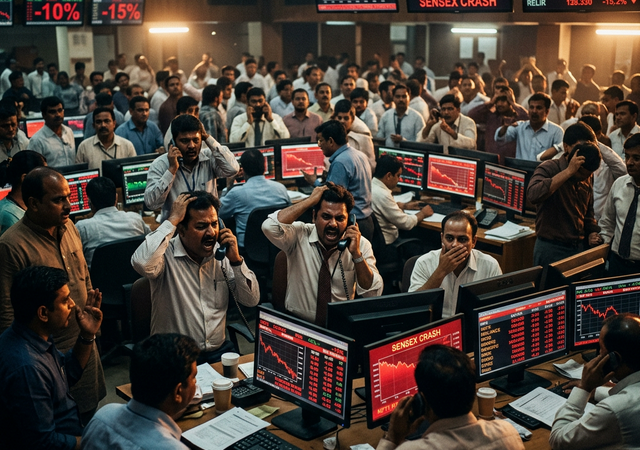
Indian stock markets experienced a devastating session as the BSE Sensex crashed by a massive 1,380 points, marking one of the sharpest single-day declines in recent memory. The carnage was not limited to large-caps—the Nifty 50, midcap, and smallcap indices all recorded significant losses, while the Indian Rupee depreciated sharply against the US Dollar.
The Trigger: A Perfect Storm
The crash was driven by a convergence of negative factors:
- Geopolitical Escalation: The intensifying Iran-Israel conflict triggered a global risk-off sentiment, with emerging markets bearing the brunt of the selloff.
- Oil Price Spike: Crude oil prices surged on fears of supply disruptions through the Strait of Hormuz, directly threatening India’s energy security and fiscal math.
- FII Selling: Foreign Institutional Investors turned net sellers, unwinding positions built during February as risk aversion surged.
- Currency Pressure: The Rupee’s sharp depreciation against the Dollar amplified losses for foreign-currency investors, creating a negative feedback loop of selling pressure.
Sectoral Breakdown
Every major sector ended in the red. Energy and banking stocks led the decline, followed by IT services (hit by Rupee volatility) and metals (on global demand concerns). Only select pharma names showed relative resilience, benefiting from their defensive characteristics.
What Investors Should Know
While such sharp declines are alarming, they are not unprecedented during geopolitical crises. Historical data shows that markets tend to recover once the immediate shock subsides, though the trajectory depends entirely on how the underlying geopolitical situation evolves in the coming days and weeks.
Disclaimer: This article is for informational purposes only and does not constitute investment advice, a recommendation, or a solicitation to buy or sell any securities. The views expressed are those of the author and do not represent the official position of Benzinga India. Readers should consult a SEBI-registered financial advisor before making any investment decisions. Benzinga India and its authors do not hold any positions in the securities mentioned in this article unless explicitly stated.