The World’s Energy Lifeline Under Siege
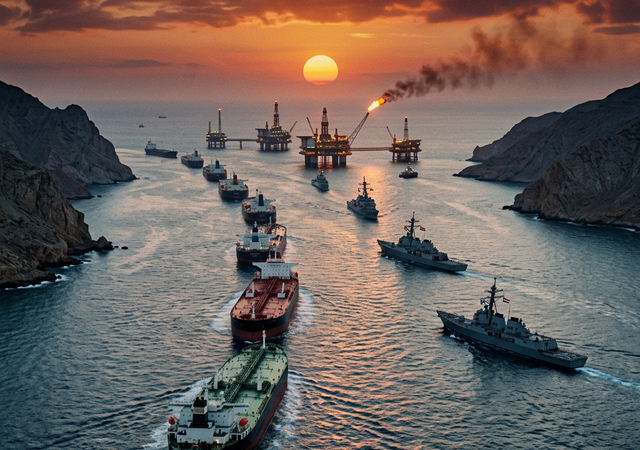
The escalating military conflict between the United States, Israel, and Iran has effectively shut down the Strait of Hormuz — the narrow waterway connecting the Persian Gulf to the Gulf of Oman, through which approximately 20-25% of the world’s daily crude oil exports and 20% of global liquefied natural gas (LNG) supply transit daily. This amounts to roughly 20-21 million barrels per day of crude oil.
Commercial shipping operators and insurers have withdrawn from the region due to heightened security risks, halting the vast majority of tanker traffic. Iranian retaliatory missile strikes and the threat of naval mines have made the strait effectively impassable for civilian vessels.
Oil Prices Spike: Brent Crude Surges to $83, Could Hit $150
The immediate market reaction has been severe. Brent crude prices surged approximately 7% to $83 per barrel, while US crude jumped 11% to over $74 per barrel. Goldman Sachs Research estimates that a full one-month closure without mitigating factors could push prices up an additional $15 per barrel. The investment bank raised its Q2 2026 average Brent crude forecast by $10 to $76/barrel.
However, the most alarming projections come from Wood Mackenzie, which warns that $150 oil is a real possibility if the strait remains shut. Around 14 million barrels per day of crude oil — representing 32% of global seaborne crude — is directly threatened by the ongoing disruption.
LNG Markets and Global Inflation at Risk
The energy crisis extends far beyond crude oil. Goldman Sachs projects potential price increases of 130% in Asian and European natural gas markets if LNG flows through the strait are fully halted for one month. A sustained rise to $100 per barrel could add 0.6-0.7% to global inflation, potentially pushing economies already weakened by post-pandemic recovery into recession.
Alternative pipeline routes exist — including Saudi Arabia’s East-West Pipeline and the UAE’s Fujairah Pipeline — but their combined capacity can only partially offset a full closure. Iraq, Kuwait, Bahrain, and Qatar have virtually no bypass capacity for their oil exports, leaving these nations critically exposed.
Disclaimer: This article is for informational purposes only and does not constitute investment advice, a recommendation, or a solicitation to buy or sell any securities. The views expressed are those of the author and do not represent the official position of Benzinga India. Readers should consult a SEBI-registered financial advisor before making any investment decisions. Benzinga India and its authors do not hold any positions in the securities mentioned in this article unless explicitly stated.