From Global Safe Haven to Frontline: Dubai’s Worst Week
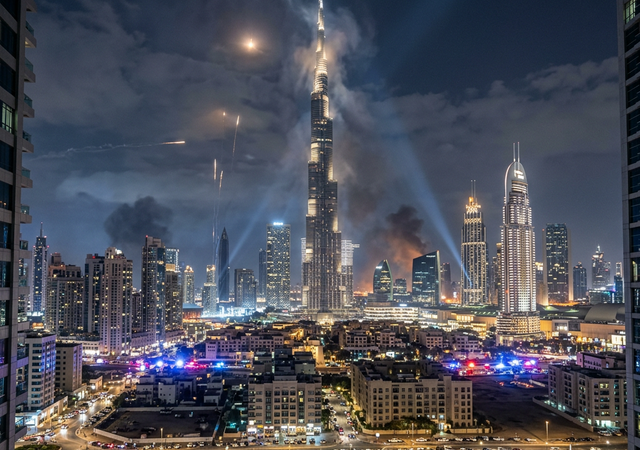
The United Arab Emirates — and its crown jewel, Dubai — has found itself on the frontline of a conflict it desperately tried to avoid. According to reports from the Atlantic Council and Carnegie Endowment, the UAE has “borne the brunt of Iran’s early attacks” under Operation True Promise 4, suffering direct hits on civilian infrastructure including Dubai International Airport, commercial ports, and areas near luxury hotels.
Fires were reported near high-end hotels in the Dubai Marina district, while emergency services scrambled to manage the aftermath of drone strikes that penetrated the emirate’s layered air defense network. The DXB airport was temporarily shut down, disrupting thousands of flights and stranding travelers across the globe.
Missile Defense and the D33 Economic Agenda
Dubai authorities have activated their world-class security infrastructure, including advanced Patriot and THAAD missile defense batteries, AI-driven emergency protocols, and comprehensive evacuation procedures. Government communications have emphasized that the city remains fundamentally safe and operational, projecting a message of resilience and “business as usual.”
The economic implications are potentially devastating. Dubai’s D33 Economic Agenda — an ambitious plan to double the city’s GDP by 2033 — now faces its greatest stress test. The emirate is leveraging its reputation for geopolitical neutrality and its growing AI-driven safety ecosystem to reassure both residents and international investors.
Real Estate Resilience and the “Global Sanctuary” Narrative
Remarkably, early market data suggests Dubai’s real estate market remains resilient, with wealthy international investors continuing to view the emirate as a safe haven for capital, even amid the regional turmoil. The logic, according to analysts, is that Dubai’s diversified economy, advanced infrastructure, and rapid crisis-response capabilities make it a more attractive destination than ever for those seeking stability in an increasingly unstable world.
However, the long-term economic consequences remain deeply uncertain. If Iranian strikes continue and the conflict escalates further, even Dubai’s formidable defenses and economic diversification may not be enough to shield it from the devastating fallout of a full-scale regional war.
Disclaimer: This article is for informational purposes only and does not constitute investment advice, a recommendation, or a solicitation to buy or sell any securities. The views expressed are those of the author and do not represent the official position of Benzinga India. Readers should consult a SEBI-registered financial advisor before making any investment decisions. Benzinga India and its authors do not hold any positions in the securities mentioned in this article unless explicitly stated.