A Nation on the Brink Before the First Bomb
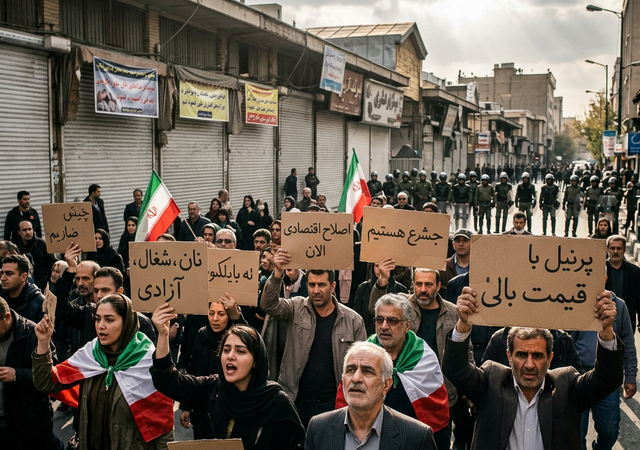
Before Operation Epic Fury’s first missile hit Tehran, Iran was already tearing itself apart from within. Starting December 28, 2025, massive anti-regime protests erupted across Iran, eventually spreading to all 31 provinces. What began as economic grievances in Tehran’s Grand Bazaar — with shopkeepers striking over the collapsing rial — evolved rapidly into a nationwide movement demanding the end of the Islamic Republic system itself.
This was the deepest and longest economic crisis in Iran’s modern history, driven by a toxic combination of international sanctions, domestic mismanagement, rampant corruption, and escalating geopolitical instability.
Devastating Economic Numbers: 42% Inflation, 72% Food Price Surge
By December 2025, Iran’s inflation had surged past 42%, with food prices alone escalating by a staggering 72%. The Iranian rial experienced a catastrophic collapse against the US dollar, reaching unprecedented lows and decimating the purchasing power of ordinary citizens. Millions of Iranians struggled to afford basic necessities — bread, cooking oil, and medicine.
Compounding the crisis, Iran endured severe and prolonged water shortages and electricity cuts throughout 2025, forcing schools and businesses to close for extended periods. These infrastructure failures amplified public fury and eroded whatever remaining legitimacy the regime held.
Brutal Crackdown: Mass Arrests and Internet Shutdown
The Iranian authorities responded with a devastating and deadly crackdown. According to Amnesty International, the regime engaged in mass killings, widespread arrests of thousands of protesters, and a nationwide internet shutdown implemented around January 8, 2026. University students, women, and ethnic minorities bore the disproportionate brunt of the repression.
Despite the violent suppression, analysts warned that the underlying economic grievances had not been addressed and that the regime’s hold on power was rapidly eroding from within — a critical context that may have influenced the timing of the US-Israeli military intervention.
Disclaimer: This article is for informational purposes only and does not constitute investment advice, a recommendation, or a solicitation to buy or sell any securities. The views expressed are those of the author and do not represent the official position of Benzinga India. Readers should consult a SEBI-registered financial advisor before making any investment decisions. Benzinga India and its authors do not hold any positions in the securities mentioned in this article unless explicitly stated.