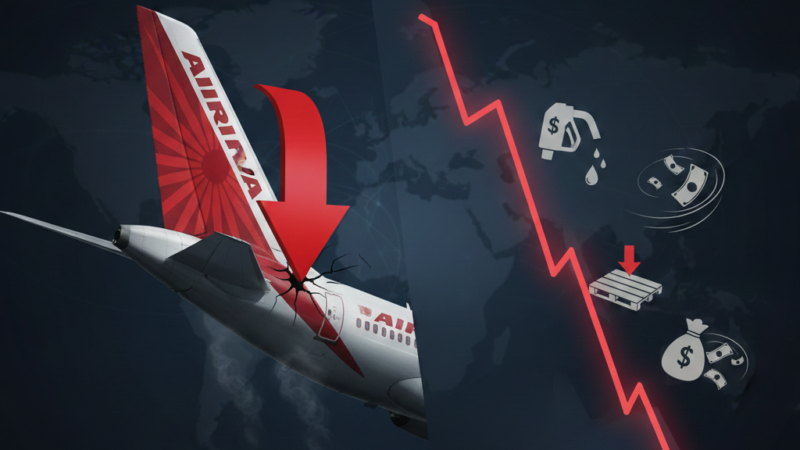
Air India’s $1.6 Billion Loss in FY26: Shocking Financial Projections
The once-proud flag carrier of India, Air India, is staring down a precipitous financial future, with projections indicating a staggering loss of approximately $1.6 billion for the fiscal year 2026. This alarming forecast, revealed through internal documents and subsequently reported, paints a grim picture for the airline as it grapples with the aftermath of its privatization and the persistent challenges plaguing the aviation industry. The sheer scale of this projected deficit underscores the immense task ahead for Tata Sons, the conglomerate that acquired the airline in January 2022, in its bid to steer Air India back towards profitability and regain its former glory.
The road to this projected loss has been a complex and multifaceted one. While the Tata Group’s acquisition was heralded as a new dawn for Air India, promising a much-needed infusion of capital, strategic vision, and operational efficiencies, the reality on the ground has proven to be more challenging. The airline inherited a significant debt burden, an aging fleet, and a workforce grappling with decades of underinvestment and bureaucratic inertia. The COVID-19 pandemic further exacerbated these issues, decimating air travel demand and pushing airlines globally to the brink.
The Magnitude of the Financial Challenge
The $1.6 billion loss projection is not merely a number; it represents a deep-seated struggle to align costs with revenues in a highly competitive and volatile market. Several factors contribute to this projected deficit. Firstly, the airline is undertaking a significant fleet modernization program. While essential for long-term competitiveness and passenger experience, the acquisition of new aircraft involves substantial upfront costs and financing expenses. These investments, while crucial for the future, weigh heavily on the company’s financial statements in the short to medium term.
Secondly, operational expenses remain a significant concern. Fuel costs, a major component of airline expenditure, are subject to global market fluctuations and have been on an upward trend. Air India also faces the challenge of optimizing its route network and enhancing aircraft utilization to maximize revenue generation. Furthermore, the integration of Air India with its subsidiaries, Air India Express and AIX Connect (formerly AirAsia India), presents its own set of complexities, including the harmonization of IT systems, operational procedures, and workforce structures. This integration process, while vital for creating a unified and efficient entity, can lead to temporary cost increases.
Addressing the Root Causes of the Projected Shortfall
The Tata Group has acknowledged the gravity of the situation and is reportedly implementing a multi-pronged strategy to address the financial headwinds. A key pillar of this strategy involves aggressive cost-cutting measures across all operational areas. This includes streamlining administrative functions, optimizing maintenance schedules, and renegotiating vendor contracts. The focus is on identifying inefficiencies and eliminating redundancies to bring down the airline’s cost base.
Furthermore, there is a concerted effort to improve revenue management. This involves optimizing fare structures, enhancing ancillary revenue streams through improved baggage policies, in-flight services, and loyalty programs, and strategically adjusting capacity on profitable routes. The airline is also looking to expand its international presence, tapping into lucrative long-haul markets where it can command better yields.
The Long Game: Rebuilding Air India
The projected $1.6 billion loss in FY26, while stark, should be viewed within the context of Air India’s ongoing transformation. The Tata Group’s investment is not a short-term fix but a long-term commitment to rebuilding a national airline from the ground up. This involves not only financial restructuring but also a significant cultural and operational overhaul. The focus is on instilling a customer-centric approach, enhancing service quality, and fostering a more agile and responsive organizational culture.
The path to profitability will likely be a marathon, not a sprint. Investors and stakeholders understand that the turnaround of a legacy airline of Air India’s scale will take time and sustained effort. The current financial projections, while concerning, serve as a critical benchmark and a call to action, highlighting the urgency and the scale of the challenges that must be overcome. The success of this ambitious turnaround will not only determine the future of Air India but also significantly impact the broader Indian aviation landscape. The coming years will be a true test of the Tata Group’s strategic acumen and its ability to navigate the complexities of turning around one of the world’s most challenging airline transformations.