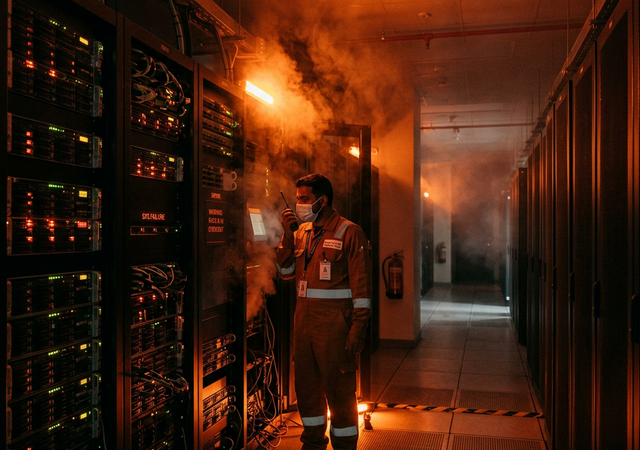
Critical Cloud Infrastructure Under Threat
Amazon Web Services (AWS) confirmed a fire at its data center in the United Arab Emirates after an unidentified object struck the facility in Dubai. The incident has raised immediate concerns about the security and resilience of critical cloud infrastructure in the volatile Middle Eastern region.
What Happened
According to initial reports, the fire broke out after a projectile or debris impacted the facility. Emergency services responded promptly, and the fire was contained before causing catastrophic structural damage. However, the incident has triggered an immediate review of physical security protocols at all AWS facilities in the region.
Impact on Cloud Services
AWS operates the Middle East (UAE) Region as a critical availability zone serving customers across the Gulf Cooperation Council (GCC) countries, parts of Africa, and South Asia. Any disruption to this facility could potentially affect:
- Enterprise Customers: Banks, airlines, and government agencies in the UAE rely heavily on AWS infrastructure.
- Data Sovereignty: Many organizations chose the UAE region specifically to comply with local data residency requirements.
- Disaster Recovery: AWS’s multi-AZ architecture provides redundancy, but physical damage to a facility raises questions about the limits of cloud resilience in conflict zones.
Industry-Wide Implications
This incident will likely accelerate conversations about the geographic diversification of cloud infrastructure, with companies potentially re-evaluating their dependency on data centers located in geopolitically sensitive regions.