The World’s Third-Largest Oil Importer is Dangerously Exposed
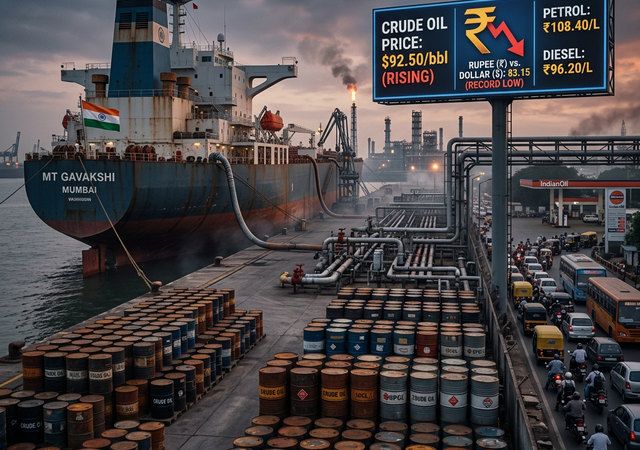
India is the world’s third-largest crude oil consumer and importer, fulfilling approximately 84-85% of its total crude oil needs through imports. This staggering dependency makes India uniquely vulnerable to the current Middle East conflagration. An estimated 35-50% of India’s crude oil imports transit through the now-effectively-closed Strait of Hormuz — the chokepoint at the heart of the US-Iran conflict.
Every $1 increase in global crude oil prices is estimated to raise India’s import bill by approximately ₹16,000 crore ($1.9 billion). With Brent crude having already surged 7-8% and analysts warning of potential spikes to $100-$150 per barrel, the fiscal implications for India are staggering.
The Rupee in Freefall: Record Lows Against the Dollar
The surging oil import bill has triggered an increased demand for US dollars, putting immense downward pressure on the Indian Rupee, which has hit record lows against the greenback. Economists estimate that a sustained $10/barrel increase in crude prices could expand India’s Current Account Deficit (CAD) by approximately 0.5% of GDP.
A depreciating rupee creates a vicious cycle: it makes oil imports even more expensive in rupee terms, which further fuels imported inflation, raises the cost of living for 1.4 billion citizens, erodes corporate profit margins, and potentially forces the Reserve Bank of India (RBI) to raise interest rates — slowing economic growth precisely when the global economy is already fragile.
India’s Emergency Response: Strategic Reserves and Diversification
India is not caught entirely unprepared. The government has activated its emergency crude supply strategy, which includes:
- Strategic Petroleum Reserves (SPR): India maintains reserves at Visakhapatnam, Mangaluru, and Padur with a combined capacity of 5.33 Million Metric Tonnes. Combined with refinery stocks, this provides approximately 74 days of crude oil cover.
- Source Diversification: India now imports from over 40 countries. Key non-Hormuz suppliers include Russia (which has become a major source since 2022), the United States, Brazil, and West African nations. The government is actively exploring increased purchases from these regions.
- Alternative Shipping Routes: Indian shipping companies are evaluating longer but safer routes avoiding the Persian Gulf entirely, though this adds significantly to logistics costs and delivery timelines.
However, analysts warn that India’s SPR reserves are designed for short-term disruptions. A prolonged conflict lasting months would overwhelm these buffers and force the government to make painful choices — subsidize fuel at massive fiscal cost, or pass prices to consumers and risk social unrest and electoral backlash.
Disclaimer: This article is for informational purposes only and does not constitute investment advice, a recommendation, or a solicitation to buy or sell any securities. The views expressed are those of the author and do not represent the official position of Benzinga India. Readers should consult a SEBI-registered financial advisor before making any investment decisions. Benzinga India and its authors do not hold any positions in the securities mentioned in this article unless explicitly stated.