India’s technology startup ecosystem is undergoing an unprecedented structural reset in 2026, marked by sharp valuation corrections, delayed initial public offerings (IPOs), and the rise of “zombie startups.” Late-stage venture capital investors and public market institutional buyers have fundamentally shifted their underwriting criteria, replacing the aggressive growth-at-any-cost ethos of the post-pandemic boom with strict demands for positive EBITDA, capital efficiency, and clear unit economics.
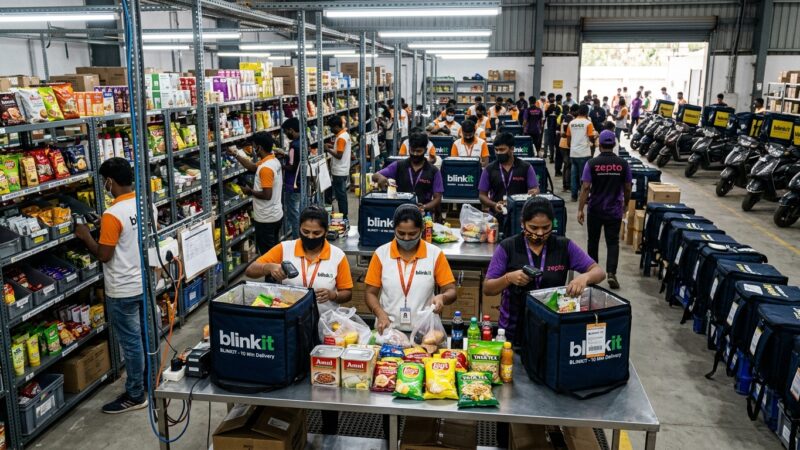
The valuation recalibration is clearly demonstrated in upcoming public market debuts. E-commerce logistics platform Shiprocket is preparing to file its prospectus with an expected valuation of approximately ₹7,000 crore—representing a steep 30% haircut from its previous private funding valuation of ₹10,000 crore. Similarly, quick-commerce unicorn Zepto put its proposed ₹8,010 crore IPO on hold despite securing preliminary SEBI clearance, after institutional buyers balked at a $7 billion private valuation, capping public market pricing appetite closer to $4.5 billion.

Major consumer tech leaders including Flipkart and PhonePe have likewise adjusted their IPO timelines. While Walmart-backed Flipkart successfully completed its corporate re-domiciling from Singapore back to India, management has deferred its formal DRHP filing to late 2026 or 2027 to await more favorable market liquidity. PhonePe has similarly paused its public listing preparations, prioritizing operational margin expansion over premature public market exposure in a volatile global macro environment.
The Rise of ‘Zombie Startups’ & Unicorn Resets
Industry researchers highlight that at least 12 Indian tech unicorns have officially lost their $1 billion-plus valuations over the past 12 months, giving rise to a growing cohort of “zombie startups.” These venture-backed entities remain operational on paper, surviving on leftover capital reserves from earlier funding rounds, but have scaled back operations so drastically that they no longer possess market relevance or competitive momentum.
Venture capital partners emphasize that the current “Great IPO Pause” is a necessary correction for the long-term health of India’s capital markets. Public market investors are refusing to pay private-market scarcity premiums for unproven unit economics. Founders who proactively restructure balance sheets, accept down-round valuation resets, and demonstrate sustainable cash generation will emerge as the primary leaders of India’s next technology cycle.
Related Market & Startup Analysis
- Home-Services Dilemma: ‘Insta-Help’ Apps Scale Order Volume But Struggle with Unit Economics
- Venture Capital Pivot: Global Funds Reallocate Capital from Consumer Apps to High-Efficiency AI
- Ola Electric Market Share Drops to 6.8% as Legacy Automakers TVS and Bajaj Dominate EV Sector
- Flipkart Prepares ONDC Food Delivery Launch in Bengaluru with Disruptive 10% Commission Model
Disclaimer: Financial news and startup market analysis presented on Benzinga India are provided for informational and educational purposes only. Market investments carry inherent financial risks. Readers should consult certified financial advisors before making investment decisions.