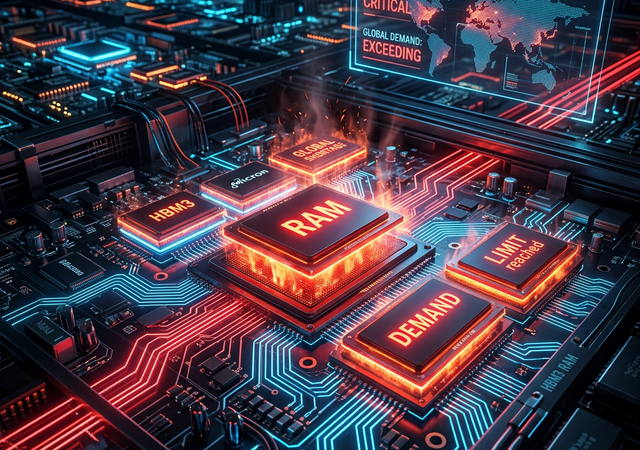
The AI-Driven Demand for High-Bandwidth Memory
The tech industry is currently facing an escalating global shortage and significant price increases for Random Access Memory (RAM), a vital component inside virtually every electronic device. At the heart of this unprecedented demand is the exponential growth of AI data centers. Training and running massive artificial intelligence models require vast quantities of high-bandwidth memory (HBM). While HBM is designed specifically for enterprise hardware like Nvidia’s powerful AI GPUs, it shares the exact same wafer fabrication process as consumer-grade RAM. This creates a challenging zero-sum game: every silicon wafer allocated to producing HBM for enterprise AI systems means one less wafer available for laptops, smartphones, and other consumer electronics.
A Constrained Supply Chain
The market for RAM production is highly concentrated, with approximately 93% of the world’s memory chips manufactured by just three major companies: Samsung, SK Hynix, and Micron. This limited supply chain has been profoundly impacted by the sudden AI surge.
To put the scale of this demand into perspective, OpenAI alone has reportedly secured an estimated 40% of global high-bandwidth RAM production for its extensive long-term AI infrastructure plans. Furthermore, Micron recently announced a strategic pivot away from consumer RAM and SSDs to focus entirely on more lucrative AI and enterprise buyers. This shift has severely constrained the supply for everyday consumer products and led to desperate, heated negotiations among tech giants like Google and Microsoft, who have struggled to secure sufficient DRAM allocations—reportedly leading to executive firings in some cases.
Why Aren’t Manufacturers Building More Fabs?
Despite skyrocketing demand and prices, memory manufacturers remain hesitant to significantly expand production capabilities or construct new fabrication plants (fabs).
Current facilities are already operating at maximum capacity. Building a new fab is an immense undertaking that costs billions of dollars and takes a minimum of two years to become operational. Manufacturers are also exercising caution due to hard-learned lessons from the past, such as the mid-2010s “smartphone bubble.” During that period, companies over-ramped production, which ultimately led to a massive oversupply and a subsequent collapse in prices. This reluctance to commit to large-scale, long-term expansion is compounded by lingering uncertainties regarding the sustainability of the current AI boom, with even OpenAI CEO Sam Altman acknowledging the possibility of an “AI bubble.”
The Consumer Fallout: Price Hikes and Scarcity
The consequences of this RAM crisis are already rippling across the global consumer electronics market:
- Smartphones: Chinese smartphone manufacturers are warning of imminent price increases. Apple is reportedly paying a staggering 230% premium for memory in its new iPhone models, causing chip costs to soar from $25-29 to approximately $70 per phone.
- PCs and Laptops: Leading PC makers, including Dell, Lenovo, and HP, are facing severe memory shortages that are expected to last until 2027. This will likely lead to announced price hikes and potential limitations on base device memory configurations.
- Gaming Consoles: The crisis threatens to delay next-generation hardware like the PlayStation 6 and the next Xbox. Nintendo has already lost billions in market value over investor concerns regarding rising memory costs for the successor to the Switch.
- PC Hardware: Retailers in Japan are placing strict limits on hard drive purchases. Nvidia, a key beneficiary of the AI data center boom, is rumored to push the pricing of its upcoming high-performance GPUs, like the RTX 5090, to astronomical levels (up to $5,000). The company is also reportedly pausing new gaming GPU releases for consumers in 2026 to prioritize its lucrative data center demand.
As the AI revolution continues to reshape the technology landscape, the global RAM shortage serves as a stark reminder of the delicate balance within semiconductor supply chains. Consumers eager for the next generation of electronics may simply have to brace themselves for higher price tags and limited availability for the foreseeable future.