Red Sea Instability Drives Up Freight Costs
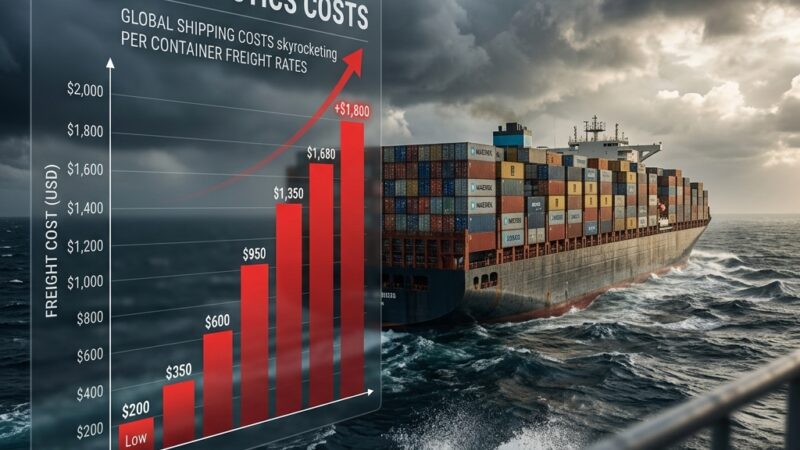
Exporters targeting West Asia are facing a massive logistics crunch as container freight rates have surged dramatically. According to recent shipping data, the cost to transport a standard twenty-foot equivalent unit (TEU) container has jumped to $2,000. This represents a nearly ten-fold increase from the pre-conflict benchmark rate of just $203.
The primary driver of this rate spike is the persistent geopolitical instability around key maritime corridors, particularly the Red Sea and Gulf of Aden. Major shipping lines have been forced to re-route vessels around the Cape of Good Hope, adding thousands of miles and weeks to transit times, which has severely disrupted container schedules and created severe equipment shortages at major export terminals.

Supply Chain Strain and Rising Fuel Surcharges
The extended transit times have also driven up bunker fuel consumption, forcing shipping lines to pass these expenses down via heavy emergency fuel surcharges. Exporters are struggling to manage these soaring logistics costs, which are compounding the pressure of high oil prices. Industry analysts warn that these elevated freight costs could remain a persistent feature of global trade well into the second half of 2026.
Disclaimer: This article is for informational purposes only and does not constitute investment advice, a recommendation, or a solicitation to buy or sell any securities. The views expressed are those of the author and do not represent the official position of Benzinga India. Readers should consult a SEBI-registered financial advisor before making any investment decisions. Benzinga India and its authors do not hold any positions in the securities mentioned in this article unless explicitly stated.