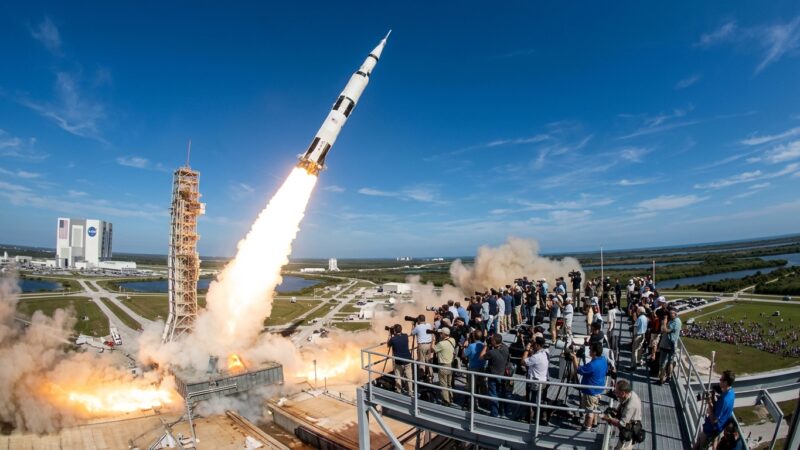
Elon Musk’s dual aerospace and artificial intelligence ventures achieved major technical milestones in late July 2026. SpaceX executed the thirteenth integrated test flight (Flight 13) of its massive Starship launch vehicle from Starbase, Texas, demonstrating key orbital payload deployment capabilities. Simultaneously, Musk’s AI venture, xAI, unveiled an aggressive hardware and model architecture roadmap, detailing the rollout of next-generation Grok foundation models scaling into multi-trillion parameter frontiers.
SpaceX’s Flight 13 launch succeeded following two prior operational delays, including an initial scrub caused by a upper-stage engine startup anomaly and subsequent weather holds. During the July 24 flight test, the Super Heavy V3 booster executed a precision boostback burn, while the Starship upper stage deployed 20 next-generation Starlink V3 satellites into low Earth orbit. Telemetry data confirmed improved thermal protection tile performance during atmospheric reentry, culminating in a controlled ocean splashdown.
Parallel to SpaceX’s orbital progress, xAI has accelerated its generative model release schedule. Following the public launch of Grok 4.5 on July 8—a 1.5-trillion-parameter model featuring advanced reasoning capabilities—xAI announced the upcoming deployment of Grok 4.6 and Grok 4.7. Grok 4.7 is engineered with a massive 2.1-trillion-parameter architecture, utilizing enhanced reinforcement learning (RLHF) and optimized token throughput to compete directly with frontier commercial models.
Colossus Compute Cluster & Financial Valuation Dynamics
The computational engine driving xAI’s rapid model evolution is its expanding “Colossus” supercomputer cluster located in Memphis, Tennessee. Powered by over 100,000 Nvidia H100 and H200 GPUs, xAI is building infrastructure capable of training future Grok 5 models targeted at the 6-to-10-trillion parameter scale. Industry analysts note that Musk’s ability to cross-leverage data center engineering across X (formerly Twitter), Tesla, and xAI provides a distinct operational advantage in compute deployment.
While SpaceX faces periodic secondary market valuation adjustments amid intensive Starship R&D capital commitments, investors remain highly bullish on the company’s Starlink satellite internet revenue stream. With Starship Flight 13 validating commercial payload deployment and xAI pushing frontier model boundaries, Musk’s interconnected technology ecosystem continues to set the pace across private aerospace and frontier AI development.
Disclaimer: Financial news and technology market analysis presented on Benzinga India are provided for informational and educational purposes only. Investments in technology equities carry market risks. Readers should consult certified financial advisors before executing investment decisions.